Search This Blog

Saturday, June 29, 2019

Abortion and Adam, Genesis and First Breath

There is a rather new argument that is being tossed around pro-choice circles that the Bible states that personhood begins at birth (and not at conception). The argument looks like this: Genesis states that Adam was not living until he took his first breath, therefore, until a newly born baby takes its first breath, it's not living either. Thus, aborting a fetus isn't the same thing as killing a tiny human person.

"It's not human until it takes its first breath--that's what the Bible says!"

Prolife response?

Firstly, what the Bible really says is that Adam wasn't living until God breathed into his nostrils:
then the LORD God formed the man out of the dust of the ground and blew into his nostrils the breath of life, and the man became a living being--Genesis 2:7
....which is NOT the same thing as Adam (or a newborn baby) taking his first breath. The first requires Adam to be passive and receive the breath of life from God; however, when a newborn takes its first breath, that is an action.

Incidentally, if the pro-choicer is correct that no one is a person until first breath, this means that this sweet little baby, just being delivered and not yet taking her first breath (or having God's spirit breathed into her cute little nostrils), could be killed--because she's not a person yet--for the first few seconds of her life outside the womb.


In fact, since none of us can prove that God breathed into our nostrils when we were newly born... by the pro-choicer's argument, none of us is living. And that means the pro-choicer is arguing that any of us walking around today can be killed...since none of us are really persons yet.


Also, prolifers can respond that what the Bible says is that if you're a man made out of dirt, you don't become living until God breathes into your nostrils....

So for the rest of us who are definitely NOT made of dirt, we become human beings the moment we begin to exist, which science tells us is at the moment of fertilization.

In fact, embryology textbooks assert that at the moment of fertilization an entirely new human organism is made.

“Human life begins at fertilization, the process during which a male gamete or sperm (spermatozoon) unites with a female gamete or oocyte (ovum) to form a single cell called a zygote. This highly specialized, totipotent cell marked the beginning of each of us as a unique individual.” “A zygote is the beginning of a new human being (i.e., an embryo).”
Keith L. Moore, The Developing Human: Clinically Oriented Embryology, 7th edition. Philadelphia, PA: Saunders, 2003. pp. 16, 2.


“It is the penetration of the ovum by a sperm and the resulting mingling of nuclear material each brings to the union that constitutes the initiation of the life of a new individual.”
Clark Edward and  Corliss Patten’s Human Embryology, McGraw – Hill Inc., 30


“[The Zygote] results from the union of an oocyte and a sperm. A zygote is the beginning of a new human being. Human development begins at fertilization, the process during which a male gamete or sperm … unites with a female gamete or oocyte … to form a single cell called a zygote. This highly specialized, totipotent cell marks the beginning of each of us as a unique individual.”
The Developing Human: Clinically Oriented Embryology, 6th ed. Keith L. Moore, Ph.D. & T.V.N. Persaud, Md., (Philadelphia: W.B. Saunders Company, 1998), 2-18


Out of all the arguments pro-choicers give, IMHO, this particular argument is the most eye-roll inducing.

The implications of saying that no one is a human being until he takes his first breath are absurd.

Tuesday, October 23, 2018

Abortion and "Women are going to do it anyway"

There is an argument that's presented that even if we think abortion is wrong, we as a civilized society should make it legal so that it's safer...so, at least, BOTH mom and baby won't die.

"Women are going to have abortions, regardless, because they're desperate. We don't want to go back to the days of back alley abortions. At least, let's make it so the clinics can be regulated and monitored."

Best response: we should first determine if the act is moral...then decide if it's something we want to make/keep legal.

Take this analogy: there's a barbaric practice in some places of female circumcision. I won't go into the details...but it's not a very nice thing to do to young girls.

If we apply the logic that's being promoted by the "Keep abortion legal because women are going to do it anyway" then we should make female circumcision legal so, at least, the instruments used will be sterile and we can monitor them afterwards for infection. It's a practice, after all, that people are going to continue to do, despite the fact that it's illegal.

Of course, no civilized society is going to provide a safe environment for this savage practice.


And yet...there's still this argument going around for abortions.
 

Monday, August 27, 2018

The Church in Crisis--Sexual Abuse and the Grand Jury Report

The news reports on this horrific matter in our Church bring great sadness upon all of us who love our Church, love our faith, love our God so deeply.

Best response I've seen:

"I didn't come to the church for the bishops, so I won't leave because of them. Much of this is very understandable lashing out in rage, but there are a lot of people who really have lost faith because of it. I wish I knew what to say to them. My faith was never in men, so men can disgust me and let me down, but they can't take away what wasn't theirs to give." - Tom McDonald

And another good response from Bishop Robert Barron:

https://www.facebook.com/BishopRobertBarron/videos/2650607241631662

Tuesday, June 5, 2018

Why do we get punished for the sins of Adam? (revisit)

This coming Sunday our First Reading discusses the Fall of Adam and Eve:

                            You have eaten, then,
                            from the tree of which I had forbidden you to eat!"--Genesis 3

Thus is born the doctrine of Original Sin.

All over the internet are folks who object to this concept:

  • "It seemed unfair that I should be responsible for some moral deviation that I had no control over."

  • "Why should guilt-less offspring be punished for the actions of their parents?"

  • "All people inherit Adam's sin"

  • "Every person on earth is born guilty by inheriting Adam's first sin"


How is it fair that we are guilty for what Adam and Eve did?  Why should we be found guilty for something we didn't do?


**************************************************************************************************

The articulations (in purple) above, however, demonstrate a rather impoverished understanding of Original Sin.

We are NOT guilty of the sins of Adam and Eve.

NO ONE IS GUILTY OF ANYONE ELSE'S SIN.

We simply are deprived of the grace that was given to Adam and Eve.  

They lost it because of their actions.

And because they didn't have it, they couldn't pass it on to their descendants.

We are not held personally responsible for Adam's guilt. We are not punished for someone else's sin. We didn't inherit anyone's sin.

Rather:

Although it is proper to each individual, original sin does not have the character of a personal fault in any of Adam's descendants. It is a deprivation of original holiness and justice, but human nature has not been totally corrupted: it is wounded in the natural powers proper to it, subject to ignorance, suffering and the dominion of death, and inclined to sin - an inclination to evil that is called concupiscence". Baptism, by imparting the life of Christ's grace, erases original sin and turns a man back towards God, but the consequences for nature, weakened and inclined to evil, persist in man and summon him to spiritual battle.--Catechism of the Catholic Church


That is, because Adam and Eve wounded their human nature, this wounded/flawed human nature was passed on to us.

I've heard it described analogously as a sort of spiritual genetic mutation. The original intention was for us to be living in a perfected state. However, because of our first parents' choice, they damaged this "spiritual gene", and thus every human person inherits this damaged "gene".

So...we're not guilty of anyone's sin except our own.

But we are deprived of the original perfect nature that was our inheritance.


Thus, Original Sin isn't actually a "sin" that we inherit. It's a deprivation of sanctifying grace. It's the explanation for this abnormal state we're born into.

Tuesday, April 24, 2018

Did Pope Francis say that hell doesn't exist?

Question: Did Pope Francis say that hell doesn't exist?

Short answer: No. This is fake news.

Longer answer: The apparent source of this question comes from 94 year old Italian journalist Eugenio Scalfari who, in conversation with Pope Francis, asserted this:

Francis was quoted as saying of those who die in a state of mortal sin: “They are not punished. Those who repent obtain God’s forgiveness and take their place among the ranks of those who contemplate him, but those who do not repent and cannot be forgiven disappear. A hell doesn’t exist, the disappearance of sinning souls exists.”

This is merely the assertion of Scalfari, as he recollects a conversation they had. There is no recorded transcript of this. Scalfari acknowledges that he does not take notes during these meetings, and is merely going by his memory of this discussion he and Pope Francis had. Scalfari has said: “These are not interviews, these are meetings, I don’t take notes. It’s a chat.”

In fact, Pope Francis has upheld, affirmed and professed the teachings of the Church on hell on numerous occasions. In May of 2017 at the 100th Anniversary of Our Lady's appearance at Fatima, he said:

"Our Lady foretold, and warned us about, a way of life that is godless and indeed profanes God in his creatures...Such a life, frequently proposed and imposed, risks leading to hell."

And during a prayer vigil in 2014, he addressed members of the Italian mafia saying:

"...while there is still time, so that you do not end up in hell. That is what awaits you if you continue on this path.” (bold mine)

Also, I've been in numerous discussions with people who pose the above question in a slightly different way: "Why did the Catholic Church change its teachings on hell?" When I ask what they're referencing, they say: "Your Pope just denied that hell exists". This demonstrates an egregious ignorance among so many people who think that everything the Pope says is infallible, definitively pronounced Catholic dogma. In fact, what a pope says, in conversation, is NOT THE SAME THING as a pope speaking officially. Even if a pope is preaching a homily, he is not speaking from the Office, from the Chair; his words are to be taken with the wisdom of a theologian, and ought to be considered and thoughtfully digested...but they are not the same thing as a solemn, formal declaration of Catholic dogma.
Indeed, even if a pope writes a book on theology, we ought not mistake this book for Catholic doctrine. Pope Benedict XVI says as much in the preface to his book on Jesus:
                                                       Inline image

He writes, "Of course, it goes without saying that this book is absolutely not a magisterial act, but is only the expression of my personal search for the face of the Lord (Psalm 27:8). So everyone is free to disagree with me."

Thus, even IF Pope Francis had denied the existence of hell in a conversation with a reporter (which HE DIDN'T *:) happy), that would NOT be the same as saying "The Catholic Church now denies the existence of hell". It would have been his personal opinion, just as if he had said, "I think that there will be no more hurricanes this season". We can think  he's wrong on this...but, we remain faithful Catholics.
Tuesday, March 20, 2018

Easter and the Pagan Wars (Part 3)


Inline image


It's that time of year again...when anti-Easter memes make their way on the internet. 

There's this, stating that Easter gets its name from a Germanic pagan goddess of fertility named "Eostre":

Inline image

And this, claiming that Easter gets its name from the Babylonian goddess of fertility, "Ishtar":

Inline image

 
Easter is not pagan. It is Christian and comes from the Jewish tradition of the Passover, where a lamb was sacrificed to atone for the sins of Israel.  Jesus is the Lamb of God, who takes away the sins of the world. As St. Paul wrote, "Christ our Pascha (Passover) has been sacrificed for us"--1 Cor 5:7.  And, thus, in almost every other language except English and German, Easter is called by a derivative of the Hebrew word for Passover, Pesach. In Spanish it's called Pascua; in Greek it's Pascha,; in Tagalog (Filipino) it's Pasko; in Malay it's Paskah.

So in virtually every other language any accusation that "Pascua" comes from a pagan reference to "Ishtar" or "Eostre" would be nonsensical.

It's only an objection that an English-speaker could make, thousands of years after Easter was already being celebrated by millions of people around the globe.

The memes above also make references to eggs and bunnies originating in paganism. And this website finds eggs, bunnies, (and, curiously, hot cross buns and ham!) to be quite sinister.

It’s important to note that eggs were noted fertility symbols, as for rabbits, Tammuz was noted to be especially fond of rabbits, and they became sacred in the ancient religion, because Tammuz was believed to be the son of the sun-god, Baal. Tammuz, like his supposed father, became a hunter.
The day came when Tammuz was killed by a wild pig. Queen Ishtar told the people that Tammuz was now ascended to his father, Baal, and that the two of them would be with the worshippers in the sacred candle or lamp flame as Father, Son and Spirit.
Ishtar, who was now worshipped as the "Mother of God and Queen of Heaven", continued to build her mystery religion. The queen told the worshippers that when Tammuz was killed by the wild pig, some of his blood fell on the stump of an evergreen tree, and the stump grew into a full new tree overnight. This made the evergreen tree sacred by the blood of Tammuz.
She also proclaimed a forty day period of time of sorrow each year prior to the anniversary of the death of Tammuz. During this time, no meat was to be eaten. Worshippers were to meditate upon the sacred mysteries of Baal and Tammuz, and to make the sign of the "T" in front of their hearts as they worshipped.
They also ate sacred cakes with the marking of a "T" or cross on the top. Every year, on the first Sunday after the first full moon after the spring equinox, a celebration was made. It was Ishtar's Sunday and was celebrated with rabbits and eggs.
Ishtar also proclaimed that because Tammuz was killed by a pig, that a pig must be eaten on that Sunday. By now, the readers of this tract should have made the connection that paganism has infiltrated the contemporary "Christian" churches, and further study indicates that this paganism came in by way of the Roman Catholic System.
The forty days of Lent, eggs, rabbits, hot cross buns and the Easter ham have everything to do with the ancient pagan religion of Mystery Babylon.Worshipers of the Babylonian religion celebrated the conception of Tammuz on the first Sunday after the Full Moon that followed the Spring Equinox..

Since eggs and bunnies (and hot cross buns and ham) are not referenced in our Catholic theology/doctrine/worship at Easter, this objection can be easily dismissed. Eggs and bunnies and buns and ham are not inherent to our understanding of Easter, but are rather a cultural tradition many people have embraced. 

Finally, even if it were true that Easter developed from paganism, Christianity took it, elevated it, made it holy and sacred, and now we claim it as ours. No Christian is inadvertently worshipping a Germanic or Babylonian goddess by observing Easter rituals. 

Indeed, no one can worship something without intending to worship it.

Saturday, March 10, 2018

Why are Catholics so opposed to abortion, if these babies are going to end up in heaven anyway?

I heard this question posed by a prochoicer the other day: why are Catholics so opposed to abortion, if these babies are going to end up in heaven* anyway?

Our response as Catholics should be: we don't kill people just so they can go to heaven. If this were our moral code, then we should be killing every baby right after he's been baptized, because then they'd be guaranteed a place in heaven. And killing everyone once they step out of the confessional. And killing anyone baptized who's in a state of grace.

Obviously, that's an absurd paradigm.

Rather, we work in cooperation with the will of God, and let God determine when a person dies. 

***************

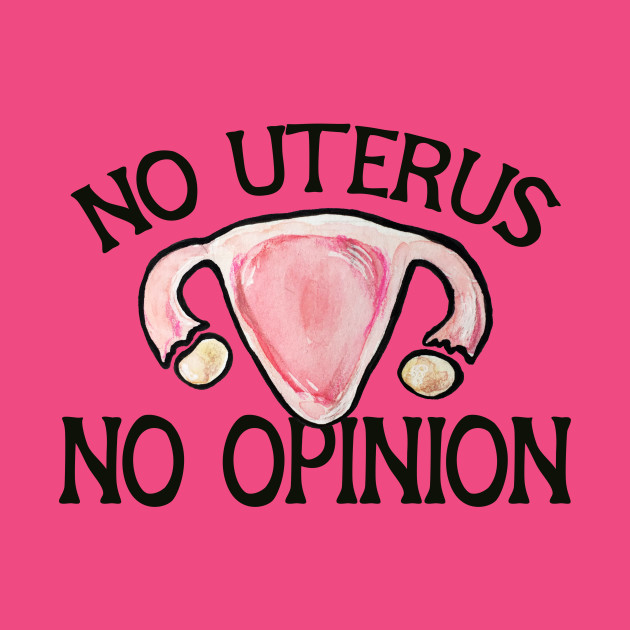
Also, there's been a lot of dialogue by prochoicers that asserts things like "When you have a uterus, then you can have an opinion on abortion. Otherwise, stay out of my business". 

Image result for no uterus, no opinion


It is a peculiar objection prochoicers have, which excludes 50% of the population from voicing an opinion.

And it should also be noted that 9 men (who presumably did not have a uterus) made their opinion on abortion the law of the land 45 years ago. These 9 Supreme Court Justices were permitted by prochoicers to rule on Roe v Wade, making abortion legal through all 9 months of pregnancy ..and prochoicers seem to have no problem with their not having female body parts on this ruling. 

As a parallel: imagine if a Northerner in the 19th century objected to a Southern Plantation owner's slavery. And the Plantation owner said, "If you don't know what it's like to manage a plantation, stay out of my business. You can't oppose slavery if you don't own a plantation". 

No plantation, no opinion! (on slavery)

That would be nonsense, right?!

****************

Finally one other prochoice question I've seen lately is: are you going to adopt every baby that's in danger of being aborted? No? Well, then stay out of the woman's business if you're not going take responsibility for that fetus.  

Our response: do you adopt every puppy that's being beaten? Should the people who oppose domestic violence take every victim into their homes to protect them? Should the abolitionist have been responsible for caring for every slave that was freed? 


Hopefully, our parallel questions will help the prochoicer recognize the absurdity of her position. One can be opposed to a particular issue on its own merits, without necessarily being responsible for every foreseeable consequence of this opposition.

_________________________________

*The Church doesn't profess that babies who are aborted go to heaven. Rather, we entrust them to the mercy of God and can have a sure hope for their salvation. "It must be clearly acknowledged that the church does not have sure knowledge about the salvation of unbaptized infants who die. She knows and celebrates the glory of the Holy Innocents, but the destiny of the generality of infants who die without baptism has not been revealed to us, and the church teaches and judges only with regard to what has been revealed. What we do positively know of God, Christ and the church gives us grounds to hope for their salvation, as must now be explained."